The Plain Dealer
- 3.9
- Rating
- 10.00K
- Installs
- Free
- Price

 Analysis by App-foxy
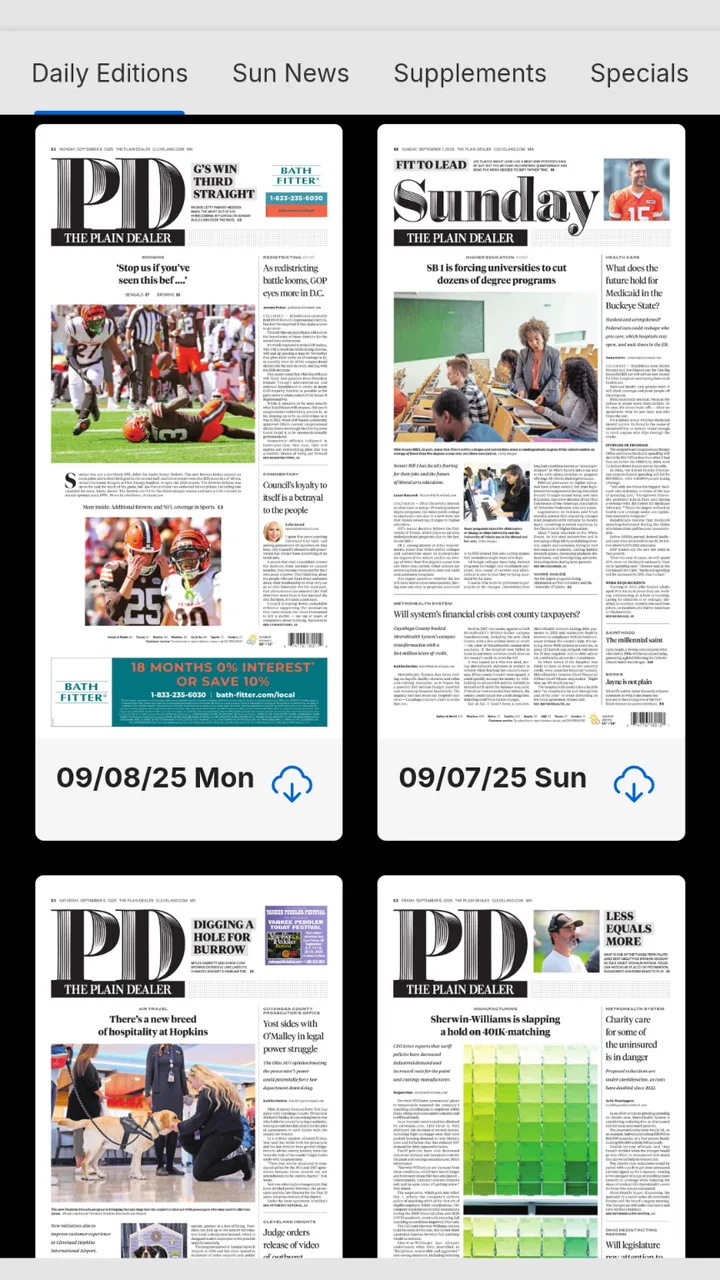
I found The Plain Dealer most useful when I treated it as a focused way to keep up with Cleveland-area reporting rather than as a complete replacement for every news source on my phone. Developed by cleveland.com, this free News & Magazines app puts the online newspaper in a mobile format, with the main benefit being quick access to local coverage when I do not want to open a browser and search around.
That sounds simple, but it changes how I use local news. A general news app is good at national headlines and major international stories. It is much less likely to give me the same sense of what is happening in Northeast Ohio, especially when the story concerns a local institution, neighborhood, court case, school issue, business, or public decision. The Plain Dealer is aimed at that narrower need, and its value depends on whether that local focus matches your daily interests.
The app is free to install and carries a Teen content rating. It has an average rating of 3.9 from around 200 ratings, with over 10 thousand installs, so it has a modest but established audience. I would not read those figures as a guarantee of a particular experience, but they do suggest that this is a practical regional news tool rather than an obscure experiment.
You May Also Like

 Pandora - Music & Podcasts
Pandora’s Music Is Easy to Start, but Harder to Recover
Pandora’s strength is its low-effort path from a seed to a station. Its weak spot is how much confidence it asks you to place in connection, setup, and quiet recovery.

 AccuWeather: Weather Radar
AccuWeather Review: A Quick, Clear Forecast for Everyday Decisions
For everyday plans, the best forecast is the one you can understand quickly. AccuWeather makes rain timing, radar, and local conditions easy to act on, with a few trade-offs.

 Hill Climb Racing
Why Hill Climb Racing Still Turns Crashes Into One More Run
A tiny car, a bumpy hill and one more upgrade: Hill Climb Racing keeps resurfacing because its simple chaos makes every near-miss feel personal.

 AliExpress - Shopping App
AliExpress Makes Global Shopping Feel Personal, but Shoppers Bear the Risk
AliExpress turns a global marketplace into a pocket-sized discovery engine. Its reach is useful, its shopping loop compelling, and its trade-offs easy to miss.

 Lords Mobile: Kingdom Wars
Lords Mobile Is a Kingdom-Building Routine, Not a Quick Match
A case-by-case verdict on the building, battles, device demands, and social commitments that make Lords Mobile rewarding for some players and exhausting for others.

 PDF Scanner app - TapScanner
TapScanner Makes Paperwork Easier to Capture, Check, and Share
TapScanner makes scanning with a phone feel less like a rescue operation and more like a dependable step in getting work done. Its capture tools are useful, though not flawless.
More From Our News Desk
View All News


Its strongest capability is keeping local news within easy reach
The central capability here is straightforward: I can use the app to follow The Plain Dealer’s online newspaper from a phone or tablet. That local concentration is more important than it may first appear. When I open a broad news aggregator, Cleveland stories can be buried beneath national politics, entertainment, technology, and international coverage. With this app, the starting point is much more relevant if Cleveland and nearby communities are already part of my everyday life.
I see the app working best as a local-news shortcut. Instead of relying on a browser bookmark, remembering the publication’s website, or scrolling through social media to discover an article, I have a dedicated place for the publication. That reduces the small amount of friction that often causes people to miss regional reporting. If I have only a few minutes with my morning coffee, a direct local source is more useful than an enormous feed that expects me to filter everything myself.
This focus also makes the app more suitable for readers who want context tied to a particular place. A national outlet may mention Cleveland only when an event becomes broadly significant. A local newspaper app has a different reason to exist: it keeps attention on stories whose importance may be obvious to residents long before they attract wider coverage. That can include changes affecting commutes, public services, local businesses, schools, neighborhoods, and community life.
I would not describe it as a universal news replacement. If your priority is a single feed combining several newspapers, international reporting, live financial information, podcasts, and personalized topics, a large aggregator may be more efficient. The Plain Dealer makes a clearer choice: it gives the publication’s local identity more room, and that is precisely why it can be more useful to the right reader.
What using it feels like in an ordinary routine
My realistic use case would be a Cleveland resident checking the app twice a day. In the morning, I would open it before work to see whether anything important has changed locally. Later, I might return during a lunch break when I want more than a headline. The app’s usefulness in that routine comes from reducing the number of steps between deciding to read local news and actually reaching it.
For someone who has moved away from Cleveland, the same workflow serves a different purpose. The app can act as a connection to the area, helping a former resident follow local developments without depending entirely on friends’ social posts. It may also suit family members who live elsewhere but still care about what is happening in the region. That is a more specific benefit than simply saying the app is “convenient”: its local focus can preserve a sense of place.
I also think it makes sense for people who are tired of algorithmic feeds. Social platforms often mix reporting with commentary, reposts, short clips, and incomplete summaries. A publication-focused app gives me a clearer starting point for reading journalism from one organization. That does not mean every reader will agree with every editorial choice, but it does make the source easier to identify than a headline encountered out of context.
One practical habit I recommend is opening the app with a question in mind. For example, I might want to know what changed in local government, whether a major regional issue has developed, or what is happening in the area’s sports and community scene. A focused question helps prevent aimless scrolling and makes a single-publication app feel more purposeful. It also helps me decide when I have read enough instead of repeatedly refreshing a broad news feed.
Why the local angle matters more than a long feature list
News apps are often compared by the number of sections, tools, and personalization options they advertise. For this one, I think the more meaningful comparison is editorial relevance. A national news app can be polished and fast, yet still leave me doing extra work to find Cleveland coverage. The Plain Dealer starts from the opposite direction. It asks whether local reporting is the reason I opened the app in the first place.
That makes it a stronger choice than a general aggregator for a reader who wants regional awareness without manually building a list of sources. It is also more direct than using a browser if my main destination is the online newspaper. On the other hand, a browser can be better when I want to move quickly between several publications, search the wider web, or avoid maintaining a separate app for one newspaper.
There is a trade-off in this specialization. A single publication cannot provide the same range of viewpoints as a multi-source reader. I would use The Plain Dealer to stay informed about its coverage, but I would still consult other reputable sources for major stories where comparison, additional context, or a different editorial perspective matters. That is not a flaw unique to this app; it is the natural consequence of choosing a focused publication experience.
The small details that affect whether it earns a place on your phone
The app is free, which makes trying it low-risk. However, in-app purchases are listed at $24.99 per item, so I would pay attention to any access or subscription prompt before assuming that every part of the reading experience is included without conditions. The important practical question is not just whether installation costs anything, but how the app’s reading access fits your expectations over time.
I would also consider the age rating. The Teen classification is a reminder that news can include mature subjects, disturbing events, crime, accidents, and strong real-world situations. Parents deciding whether to place the app on a shared device should treat it as a news publication rather than a child-oriented reading app. That does not make it unsuitable for teenagers, but it does make supervision and personal judgment sensible.
Another point is platform compatibility. The current version is 8.0.0 and requires Android 8.0 or later. For most modern Android phones, that requirement should not be a major obstacle, but anyone using an older device should check compatibility before planning around the app. I would not want to depend on it for a daily routine and discover that an older phone cannot install it.
The developer name, cleveland.com, is also useful context when evaluating what the app is for. This is not a neutral news dashboard that gathers every publisher into one place. It represents a specific newspaper brand and its online publication. I find that clarity helpful because it tells me what kind of reading experience to expect: local coverage from one established source, not a fully balanced survey of the entire news landscape.
The best scenario is local awareness without constant searching
The strongest scenario is a person who lives in or closely follows the Cleveland area and wants a simple daily entry point for regional reporting. Imagine a commuter hearing that a public decision may affect a familiar route, a parent trying to follow a local education issue, or a resident wanting to understand a developing community story. In each case, the app is useful because the reader already knows the place and needs timely local context rather than a generic headline.
It can also help someone who has a limited attention window. If I have ten minutes, I do not want to spend half of that time configuring topics or filtering unrelated headlines. A publication-specific app gives me a narrower field of attention. That is a genuine strength for readers who prefer editorial selection over endless customization.
There is a less obvious use for people who are researching a local issue over several days. Instead of relying on one social post or a search result that may quickly become outdated, I can return to the same publication and see how the story develops. The benefit is continuity: I know where to look again, and I can compare the latest coverage with what I read earlier. I would still verify important claims across sources, but a consistent local outlet is a useful anchor.
Another good scenario is sharing the app with a household member who does not want to build a personalized news setup. A dedicated local publication can be easier to explain than a complex aggregator. “This is where you check Cleveland news” is a clearer habit than asking someone to manage a collection of feeds, topics, and notifications. That simplicity may matter more than advanced customization for less technical readers.
Where the experience may feel limiting
The same narrow focus that makes the app valuable can make it feel incomplete. If I open it expecting a broad national briefing, international coverage, technology news, or a mixture of publications, I may need another app immediately afterward. Readers who want one application to handle all of their news will probably prefer an aggregator or a large national outlet with extensive sections.
I would also avoid treating it as my only source during a fast-moving or controversial event. A single publication can provide useful reporting, but comparing coverage can reveal different details, timelines, and interpretations. The Plain Dealer is best used as a strong local source within a wider information routine, not as a substitute for judgment or cross-checking.
Payment expectations deserve attention as well. Because individual in-app purchases are listed at $24.99, a reader who expects an entirely open reading experience should review what appears during use before committing to anything. I see this as a decision point rather than an automatic negative. Paying for journalism can be reasonable when the reporting is valuable to you, but the cost should match how frequently you read and whether you want access beyond casual browsing.
The rating of 3.9 is neither a warning sign nor a reason to assume perfection. It suggests a mixed but generally workable reception. In my view, regional news apps are especially sensitive to personal expectations: one reader may value the local focus above everything else, while another may judge the app by features found in much larger news platforms. I would evaluate it based on whether it gets me to the coverage I care about quickly, not by expecting it to behave like a completely different category of app.
Who gains the most from this focused newspaper app
The best match is a Cleveland-area resident who wants a direct way to read local reporting and does not need a giant, all-purpose news feed. It also makes sense for former residents, relatives of people in the region, and anyone whose work or community interests require regular awareness of Northeast Ohio. For these readers, the app’s specific identity is an advantage rather than a restriction.
I would recommend trying it if your current routine involves repeatedly searching for The Plain Dealer in a browser. A dedicated app may make that habit easier and more consistent. I would also recommend it to readers who want a publication-centered experience instead of discovering local stories through social media fragments.
I would skip it, or use it only as a secondary source, if your main goal is comprehensive national coverage, multiple editorial viewpoints in one feed, or extensive customization. A general news reader will likely save time for that kind of user. Likewise, if you rarely read Cleveland-area news, maintaining a separate local app may not add enough value compared with occasional browser visits.
My overall view is positive but deliberately specific: The Plain Dealer succeeds when I want local news to be the starting point, not an item hidden inside a national feed. Its free entry point, recognizable developer, and focused newspaper identity make it easy to try, while the listed purchase price means I would examine access carefully before paying. If Cleveland reporting is part of your daily life, this app can turn a vague intention to “keep up” into a simple repeatable habit. If it is not, a broader news alternative will probably serve you better.
FAQs for The Plain Dealer
01What is The Plain Dealer app?
The Plain Dealer app is a digital news platform for accessing reporting from The Plain Dealer, with coverage focused on Cleveland and Northeast Ohio. After installing it, users can typically browse local and breaking news, politics, sports, business, entertainment, and community stories in one place. The exact layout and available features may vary depending on the version, device, and subscription status.
02Is The Plain Dealer app free to download and use?
Downloading The Plain Dealer app is generally free, but access to all articles and premium content may require a subscription or account. Some stories can be available without payment, while frequent readers may encounter a paywall after reaching a permitted limit. Before subscribing, check the current pricing, trial terms, renewal conditions, and whether your existing newspaper subscription includes digital access.
03What kind of news can I read in The Plain Dealer app?
The app is designed primarily for readers who want news from Cleveland and the surrounding Northeast Ohio region. Content may include local reporting, investigations, sports coverage, weather-related updates, politics, business, entertainment, and opinion articles. It can be especially useful for staying informed about regional events, although the amount of content visible may depend on your membership and the current app edition.
04Does The Plain Dealer app require an internet connection?
An internet connection is normally needed to download the latest articles, images, alerts, and other content. The app should work over Wi-Fi or mobile data, but loading speed and data usage can vary with connection quality. If the version you install supports saved or offline reading, previously downloaded stories may remain accessible temporarily, though breaking news and live updates will not refresh without connectivity.
05Can I manage my subscription and notifications in the app?
Depending on the app version and your account type, you may be able to sign in, manage digital access, adjust notification preferences, and review subscription-related information. Notifications can be useful for breaking Cleveland-area news, sports results, and major updates, but they may feel frequent if left fully enabled. Review the app settings and your account page before assuming every billing option is handled directly inside the application.
Pros
- Covers Cleveland news
- local politics
- sports
- and community events in one app.
- Breaking-news alerts help users stay informed about important regional developments.
- Articles include strong local context that national news apps often lack.
- Clean layout makes it easy to browse sections and open individual stories.
- Useful for readers who want ongoing coverage of Northeast Ohio communities.
Cons
- Many full articles may require a subscription or account to access.
- Some content can feel heavily focused on Cleveland and nearby areas.
- Push notifications may become frequent during major breaking-news cycles.
- The app’s value is limited for users outside the newspaper’s coverage region.
- Certain features and articles may depend on an active internet connection.

The Plain Dealer
Gallery